
What is Responsible AI? Singapore's Framework & Examples
21 November 2025
Category
Tech Explained
Digital Government
Learn what responsible AI means in Singapore's public sector and how GovTech applies it.
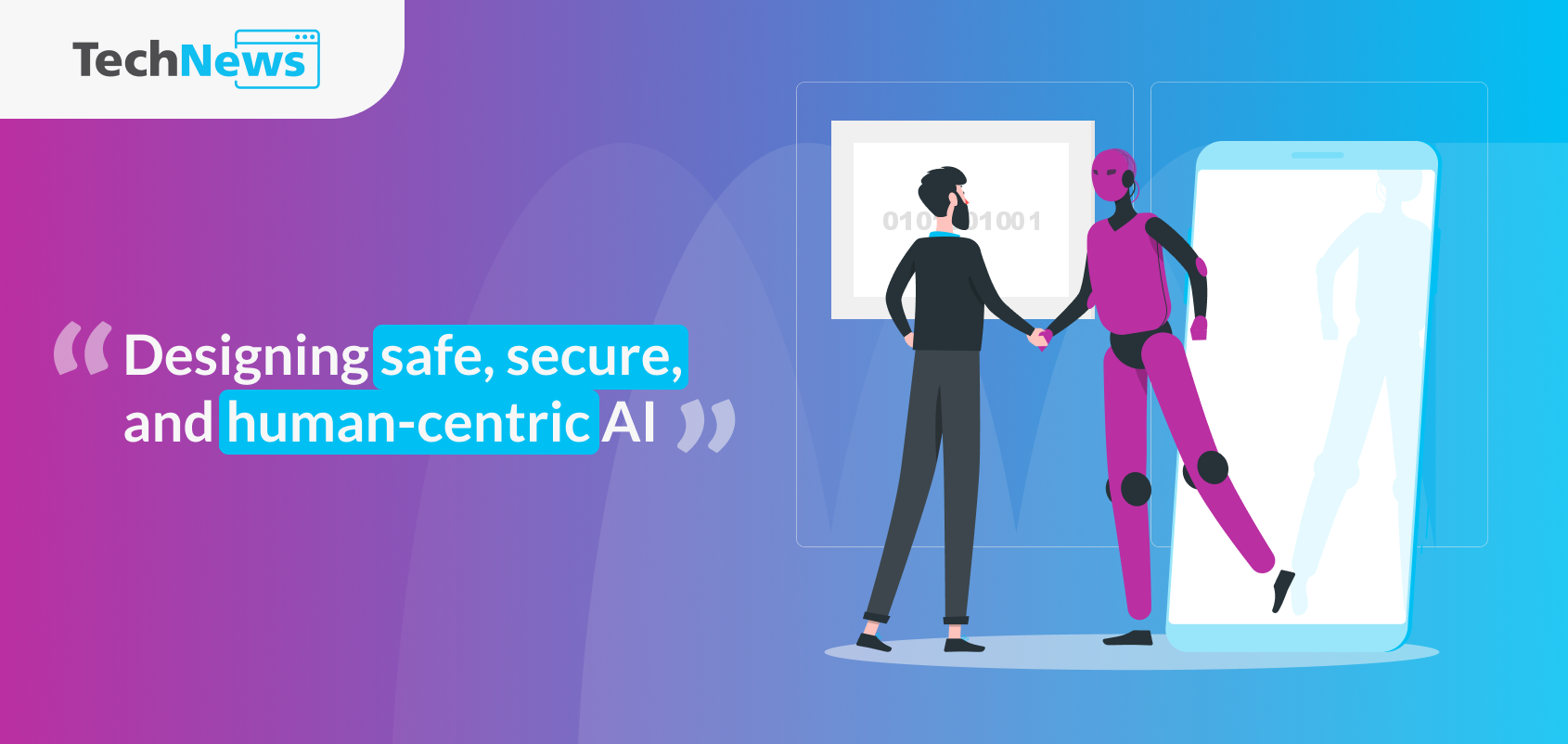
Responsible AI means developing and deploying systems that deliver societal benefits while minimising risks and harm. At GovTech, this translates into building AI applications that are safe, fair, and trustworthy for every citizen who interacts with them. Six core principles guide this work:
Safety: ensuring AI development and use do not cause negative consequences
Fairness: guarding against bias and discrimination in AI outputs
Robustness: ensuring systems perform reliably and as intended
Security and privacy: protecting sensitive citizen data
Explainability: enabling decisions to be understood by those affected
Transparency: making system behaviour and design traceable
This article, as part of the GovTech Decoded series, explores what responsible AI is in practice for Singapore's public sector, the tools GovTech has built to embed these principles at every stage of deployment, and what the next frontier of agentic AI means for responsible AI development.
What is responsible AI?
The definition of responsible AI is straightforward. How to operationalise it across a complex government ecosystem is a harder question.
Responsible AI principles and meaning
At its core, responsible artificial intelligence means creating systems that are not just technically capable but trustworthy, fair, and accountable to the people they affect. "If we can ensure that AI systems follow these principles," says Jessica, who leads Responsible AI at GovTech, "then we are guaranteed, or rather, we are more assured that we are actually using it responsibly."
In practice, the responsible use of AI at GovTech means human oversight is retained for all AI-assisted decisions affecting citizens. AI augments officer judgment rather than replacing it, and every system is designed to be explainable so that citizens can understand how decisions affecting them are made. These principles guard against bias, misinformation, and AI hallucinations in government systems, building the digital trust that underpins public confidence in government services.
Singapore's Model AI Governance Framework
Singapore's responsible AI governance is anchored in the Model AI Governance Framework (opens in new tab), developed by the Infocomm Media Development Authority (IMDA) and the Personal Data Protection Commission (PDPC). Among the first national frameworks globally to provide practical, testable guidance for responsible AI development, it sets national standards for responsible AI use across both public and private sectors. GovTech is responsible for translating the framework's guidelines on fairness, transparency, robustness, and accountability into engineering processes, playbooks, and purpose-built tools that agencies across government can apply.
How GovTech implements responsible AI practices
Responsible AI principles only become meaningful when they are embedded into the tools and processes teams use every day. GovTech's implementation approach covers the full lifecycle of an AI system, from design through to post-deployment monitoring.
Responsible AI (RAI) Playbook (opens in new tab) – a practical guide for public officers on evaluating AI safety. It outlines how to conduct testing, implement guardrails, and assess bias or misinformation risks.
AI Guardian (opens in new tab) – GovTech’s platform for safety testing and governance, featuring the Litmus (opens in new tab) and Sentinel (opens in new tab) tools. Litmus enables comprehensive safety testing and risk assessment of AI applications, while Sentinel helps mitigate common AI vulnerabilities and implement best-in-class guardrails for government use.
LionGuard 2 (opens in new tab) – a multilingual moderation classifier trained for Singapore’s context (English/Singlish, Chinese, Malay, partial Tamil) that detects unsafe or biased content in real time.
Each of these tools operationalises one or more of the six core principles: the Playbook addresses safety and fairness, AI Guardian covers robustness and security, and LionGuard 2 directly supports fairness and safety in multilingual environments.
Responsible AI development for agentic AI
Generative AI raised new questions about responsible deployment. Agentic AI, the next wave of innovation, raises those questions at a higher order of magnitude.
What is agentic AI?
Agentic AI refers to systems capable of pursuing goals and taking actions autonomously, with minimal human input for each individual step. Unlike a generative AI tool that responds to a prompt, an agentic system proactively works out the steps needed to complete a task on its own. As GovTech's Agentic AI Primer (opens in new tab) explains, this is achieved through combining a large language model as the reasoning core, memory to store context across interactions, tools for taking action such as querying a database or sending an email, and defined goals or instructions for decision-making.
The increased capability, however, also brings increased risk. Agentic systems are more prone to errors, misuse, and hallucination than simpler AI tools, and the consequences of those failures in a government context can be significant.
The ARC Framework for agentic risk management
To address these risks, GovTech developed the Agentic Risk and Capability (ARC) Framework (opens in new tab). It identifies potential risks across agentic systems at different capability levels, whether searching the internet, executing code, or accessing government databases, and outlines the technical controls teams can apply to continue innovating responsibly. The ARC Framework is GovTech's practical answer to the challenge of enabling agentic AI development without leaving safety as an afterthought.
Agentic AI in practice
Agentic AI is already being tested across several public sector domains. In CRM-related workflows, AI agents help officers surface insights from large policy datasets faster than manual analysis would allow.
As Lois, a data scientist at GovTech, explains: "When a director asks about emerging topics in a policy area, the officer could query the agentic system and get a quick answer before going back to their bosses."
In cybersecurity, GovTech is experimenting with agentic AI to automate routine threat-hunting and security testing. "Much of the work goes into codifying the expertise of our cyber officers so that AI agents can automate some of the more routine tasks," explains Ding Yao, a cybersecurity engineer at GovTech. "This frees up the capacity of our limited manpower resources so that they can focus on doing higher-value work." GovTech collaborates with global AI partners including Google to accelerate these capabilities, ensuring Singapore can advance its responsible AI development without compromising safety.
Responsible AI examples in Singapore's public sector
With the frameworks and tools in place, here is what responsible AI looks like when applied to real deployment decisions across Singapore's government.
Secure AI tools for public officers (Security, privacy, and robustness)
GovTech deploys internal AI tools that are sandboxed from sensitive citizen data, enabling public officers to benefit from generative AI for productivity without compromising data security. The Pair AI assistant, available on all government-issued devices, is a practical example of this principle applied at scale.
Officers use Pair for research, drafting, and analysis, while the system's architecture ensures that no citizen data or sensitive government information is logged by third-party cloud providers.
Human oversight in citizen-facing decisions (Safety and fairness)
Responsible AI at GovTech means human oversight is retained for all AI-assisted decisions that affect citizens. AI augments officer judgment but does not replace it. This principle applies across every citizen-facing service, from benefits assessments to employment support, where the consequences of an incorrect output are felt directly by the people the service is meant to help.
Explainability and citizen trust (Explainability and transparency)
GovTech ensures AI systems in Singapore's government are explainable: citizens interacting with AI-powered services can understand how decisions affecting them are made. This means designing systems where the reasoning behind an output can be surfaced and communicated in plain language, particularly for services involving benefits, employment, or regulatory decisions.
Responsible AI governance: Collaboration and international recognition
Singapore's approach to responsible AI governance has drawn international attention for its practical, auditable design. The Model AI Governance Framework (opens in new tab) was among the first national frameworks globally to bridge the gap between high-level AI ethics principles and concrete, testable deployment guidance, and its interoperability with major global frameworks including the US National Institute of Standards and Technology (NIST) AI Risk Management Framework reflects the breadth of its influence.
Within Singapore, GovTech works closely with IMDA, PDPC, and AI Singapore (AISG) to build a coherent national responsible AI ecosystem. IMDA's AI Verify Testing Toolkit provides standardised validation for AI systems across both public and private sectors. AISG's SEA-LION (opens in new tab), a Southeast Asian language model trained on culturally contextualised regional data, ensures AI outputs are appropriate for Singapore's multi-cultural, multilingual government context. Together with GovTech's own tools, this combination positions Singapore as one of the most comprehensive builders of responsible government AI infrastructure in the region.
Getting started with responsible AI in Singapore
Responsible AI is a continuous journey of learning, testing, and improving. For Singapore's public sector, that journey is supported by a clear set of frameworks, tools, and resources. Agencies looking to embed responsible AI practices can start with the Responsible AI Playbook, test systems with Litmus before launch, and apply Sentinel guardrails before going live.
For a closer look at how GovTech engineers are turning responsible AI into engineering practice, watch the latest episode of GovTech Decoded (opens in new tab) and explore more stories on the GovTech Decoded YouTube channel (opens in new tab).
Connect with us
Subscribe to the TechNews email newsletter (opens in new tab)
Join the Tech Kaki user-testing community (opens in new tab)