
Joy Times Nine: How LifeSG Helps a Family Navigate Life’s Many Milestones
28 August 2026
Category
Tech for Public Good
Lay Hui and Luke are raising nine children together. See how they use the LifeSG digital platform to handle the admin load so that they have more time for the family moments that matter.
.png)
A, B, C, D, E, F, G, H, I.
For most of us, that's the first nine letters of the alphabet. For Lay Hui and Luke, it's the first initials of their nine children’s names.
Amanda, Bethany, Christian, Dorothy, Emmanuel, Francisca, Gregory, Henry and Ignatius are named alphabetically after an idea that started with their eldest.
“When we had Amanda, we couldn't decide what name to choose,” Lay Hui recalls. “So we just said, ‘Okay, let's start with A.’ Then it just went on.”
The result is a household of eleven, a dining table that is almost always full, and a family moving through many different stages of life at the same time. Some of the older children are already in university, while the youngest one is a toddler at home.
As Lay Hui puts it, there is “a lot of admin” that comes with raising such a large family. From registering births to preparing for National Service (NS), managing these milestones has become part of everyday family life.
One family, many life stages
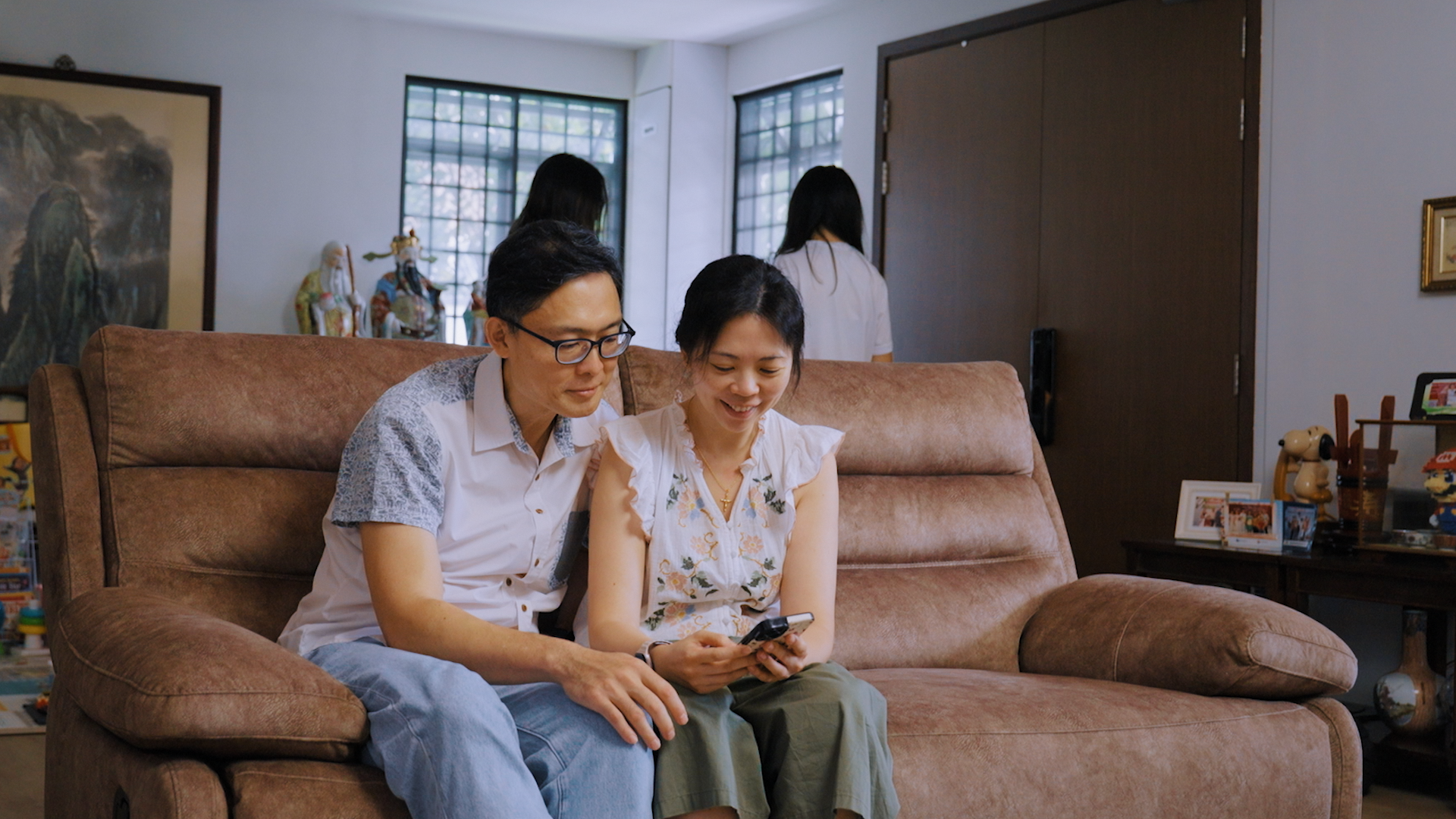
One of the first LifeSG (opens in new tab) features that proved most valuable for this family was birth registration.
The couple looks back at a time when their older children's births looked rather different. “For some of the older ones, their birth certificates had my horrible Chinese handwriting,” Luke jokes.
By the time their youngest was born, things had changed. Lay Hui discovered that she could register the birth digitally through LifeSG. But birth registration was only the beginning.
As her younger children grew, she turned to LifeSG to find information on preschools. Now one of their older children will be going to NS for the first time. For Lay Hui, it was new territory as a parent.
“Through the app, there was some information on how to prepare your son for NS. It's a bit more reassuring,” she shares.
Government services organised around life’s milestones
Built by GovTech, the LifeSG digital platform (website and app) consolidates government services and guides across life stages. The platform is built around citizens’ needs and milestones, rather than expecting citizens to seek information and services from various individual agencies.
Birth registration. Preschool. National Service.
For most families, these milestones are usually separated by years. In Lay Hui and Luke's case, they could be juggling all these milestones within the same week.
LifeSG provides a single digital touchpoint where citizens can access relevant services as their needs change. Because everything is accessible through one app, users do not need to search across multiple websites or repeatedly enter the same information. Just log in with Singpass and everything is right there on the dashboard.
Watch Episode 4 of Stories of GovTech (opens in new tab) to hear Lay Hui and Luke share how LifeSG fits into the chaotic yet deeply meaningful life they have built together.

Support for the everyday realities of a large family
Feeding nine children requires a lot more food on the table than most other households.
“Each time we buy groceries, there are quite a lot. So now we just buy in bulk, carton by carton.” Lay Hui shares. “The LifeSG credits are very useful and very convenient.”
Government support delivered through LifeSG has helped with some of those expenses. At the time the family was filmed, eligible larger households could receive Large Family LifeSG Credits under the Large Families Scheme.
From the time since Lay Hui and Luke's story was filmed, government support for families are enhanced to meet changing needs. At the 2026 National Day Rally, the Government announced the SG Child Support Package (opens in new tab), which will eventually replace the Baby Bonus Scheme and Large Families Scheme.
While the schemes evolve, LifeSG continues to serve as a reliable digital touchpoint where families can access government services, information and support as their needs evolve.
Lightening the admin load
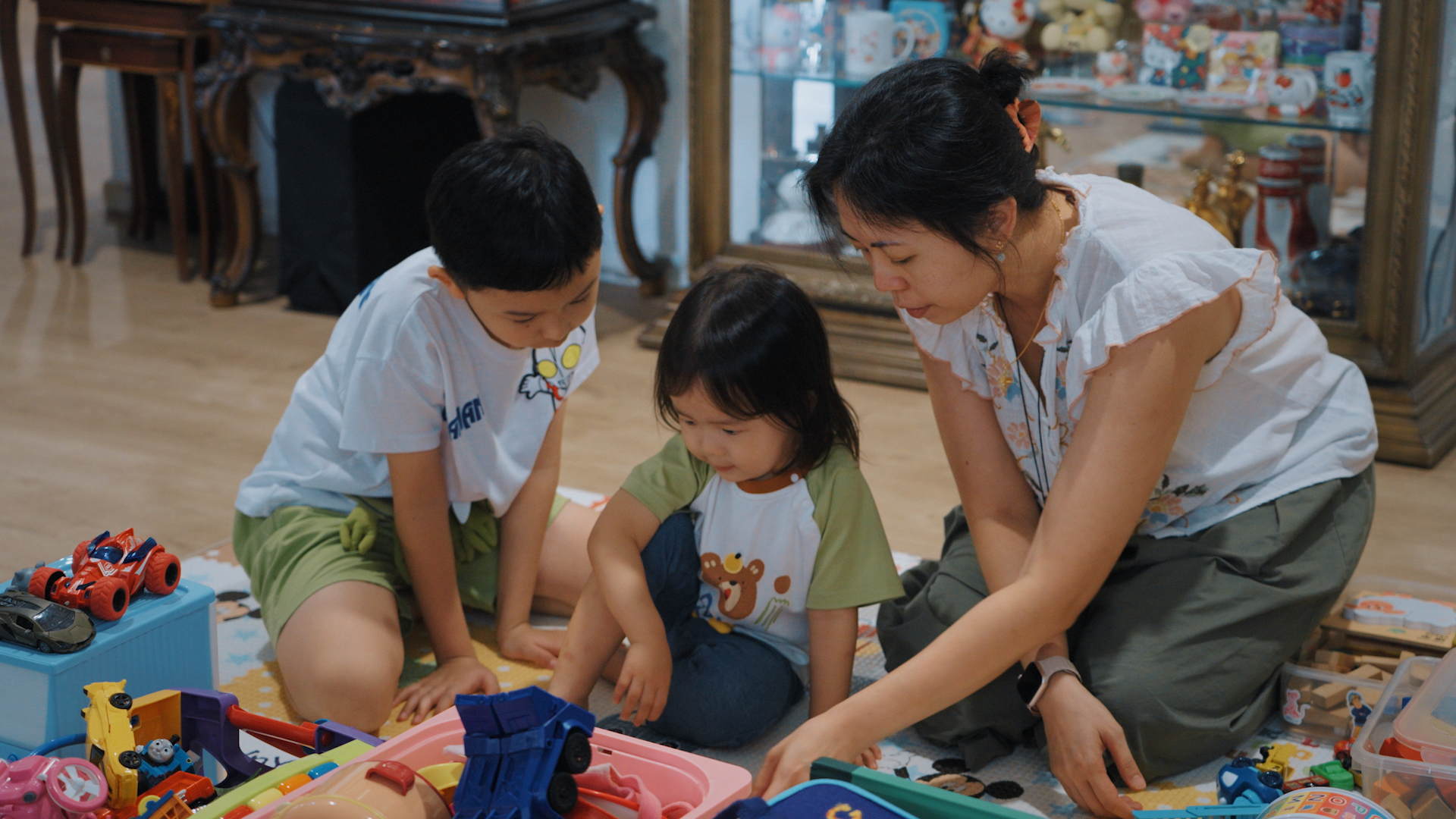
“It's challenging. I'm not going to say that it's not challenging.”
Lay Hui is candid about the difficulties, sacrifices, and collective effort it takes to manage such a large family. In their household, everything is about efficiency. The family preserves hand-me-downs and books so that younger siblings can reuse them. The children keep their own laundry, wash their plates and help with chores such as mopping the floor or cleaning the toilet.
Likewise, LifeSG is all about efficiency. The platform cannot remove all the effort of raising a large family, but by making some interactions with government easier to complete, it can remove some sources of friction from an already busy household.
The technology that enables this largely stays in the background. Singpass (opens in new tab) provides secure access to services and reduces repeated form-filling by using verified personal information, while GovWallet (opens in new tab) enables eligible government credits to be received and used digitally.
Citizens do not need to think about each of these systems separately. What matters is being able to find the right service, information or support when they need it.
For a family already juggling school runs, work, meals, chores and nine different sets of needs, making even some of that administrative work easier helps, so that the family’s energy is better spent making meaningful memories together.
The table that is always full
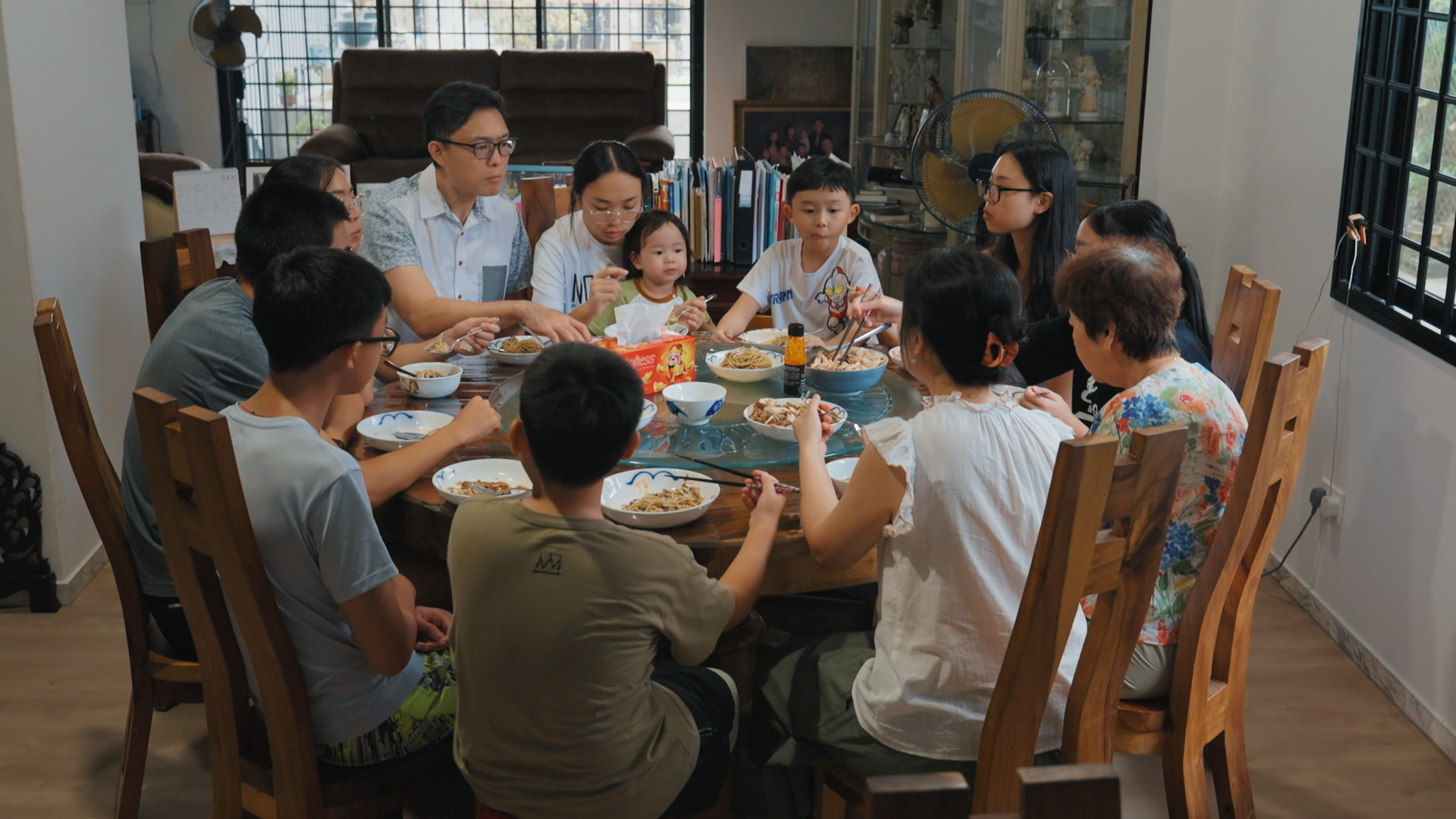
Even before they had nine children, Luke insisted on buying a ten-person table. It turned out to be a great investment. But these days, with some of the older children in university or NS, getting everyone around that table has become harder. So the limited time they all have together is even more precious.
As Lay Hui reflects, “It has its challenges, but the joy is just seeing them grow up. And the joy is times nine.”
This video is part of the #StoriesofGovTech documentary series (opens in new tab) that highlights the human impact of GovTech's efforts to build tech for public good.