
Tech Education
Smart cities around the world: Estonia
2 February 2021
Estonia's smart city innovation is a global model. Discover its world-class e-government, AI and IoT urban solutions, and technology blueprint for cities.
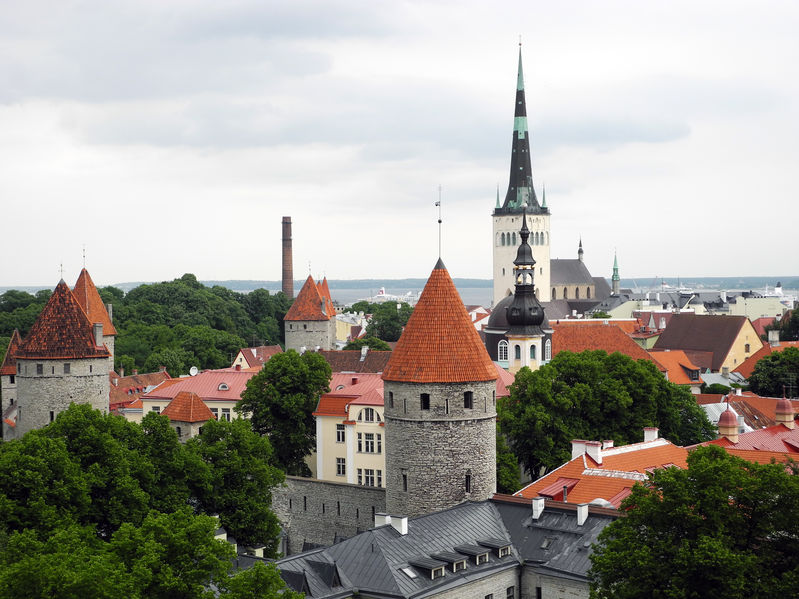
Like Singapore, Estonia may be small in size, but it has become a global giant in digital innovation. Despite being a small European nation with only around 1.4 million citizens, Estonia punches above its weight when it comes to digital adoption and is often lauded as one of the most technologically advanced countries in the world.
The country's progress is evident in its bold digital goals and rapid adoption rates. Having achieved full access to e-health records ahead of its 2030 target and with its businesses’ use of AI doubling in 2024 from the previous year, Estonia’s deep embrace of technology has naturally given rise to fascinating smart city initiatives and projects that are worth a closer look.
Let's explore Estonia’s foundation in digital society and how it became a blueprint for modern smart city development!
Digital identity and e-Governance
eID and digital services
When Estonia gained independence in 1991 from the Soviet Union, the government had to build up its public services from scratch, and from the start, it decided to go digital.
“Estonia was a relatively poor country,” Estonia’s President Kersti Kaljulaid said during a CNBC interview. “Our public sector, our government and our civil servants wanted to offer our people good quality services. We did it straight away digitally because it was simply cheaper, easy.”
Now, today, over 99% of Estonia’s government services can be done online, from paying taxes to checking health records and prescriptions to even e-voting!
The backbone of the system is Estonia’s flagship eID system, a global benchmark for secure digital identity that supports most online public service accessibility. Aptly named eID, it allows citizens to securely identify themselves when making online transactions. In fact, enabling digital signatures has allowed the country to save up to 2% of its GDP annually.
Estonia’s eID system is similar to Singapore’s very own Singpass, which also allows residents to digitally verify their identities. This grants users access to over 2,000 online services from government and private organisations, allowing users to instantly check their CPF account balances or even apply for a home online.
While both systems facilitate e-transactions to make lives easier, a key difference lies in authentication methods. While Singapore uses the Singpass app secured with fingerprint, facial recognition, or a 6-digit PIN, Estonia's mobile eID requires a specially-registered SIM card and passcode.
Either way, Estonians and Singaporeans can both agree that digital identification technology that facilitates e-transactions goes a long way to making our lives much, much easier.
e-Residency
Building on the success of its eID system, Estonia took its digital identity a step further with the launch of its e-Residency programme.
With e-Residency, individuals can establish and manage a location-independent business online, empowering global entrepreneurs and freelancers to run their businesses in Estonia remotely.
This grants them access to the European Union market and its transparent legal framework without needing to reside in the country, providing a powerful opportunity to operate a business with the credibility and security of one of the world's most advanced digital governments.
Smart mobility solutions and urban management
Mobile parking payments
ParkingSG, launched in 2017, allows Singaporean motorists to pay and manage their parking sessions via a mobile app. Gone are the days of hunting down a 7-11 to buy paper parking coupons or the fear of finding a fine plastered on the windscreen after returning from a longer-than-expected makan session.
Did you know that Estonia was the first country in the world to implement a mobile parking payment system? Estonians have been enjoying mobile parking payments since 2000.
Their mobile parking system, a key smart city solution, uses a simple mobile app to manage parking in public and private facilities, with around 90% of all parking charges paid through the system. It works through a fully automated solution that begins when the vehicle is turned off and ends once it's started up again, easily achieved by pairing the app via Bluetooth to a vehicle’s in-car entertainment system.
Even payment is simple, as the cost of the parking is added to the driver’s mobile phone bill at the end of the month.
Smart IoT pedestrian crosswalk by Bercman
When we talk about smart cities, vehicle-related solutions dominate the headlines, but in Estonia, technology is also used to create innovative solutions for the most basic commuter—the pedestrian.
Developed by the Estonian company Bercman, the Smart Pedestrian Crosswalk is an IoT cloud-based platform that uses narrow AI algorithms to predict moving trajectories.
When there’s a chance a pedestrian might be run over, the sign emits audio warnings and flashes red LEDs to grab the attention of both pedestrians and drivers, preventing an accident.
And the best part? These AI-driven pedestrian safety systems also provide valuable analytics to improve traffic flow and reduce accidents, demonstrating Estonia's focus on using technology to make cities safer and more efficient.
Now that’s really smart.
IoT and AI-powered smart infrastructure
Estonia’s commitment to cutting-edge technology is also seen in its advanced IoT and AI-powered smart infrastructure.
A prime example is the 2025 FinEst Centre Smart City Challenge, a joint initiative with Finland that's all about making cities safer, happier, and more resilient. With €800,000 in grants, pilot projects are already producing scalable, human-centred solutions.
This focus on innovation extends to Estonia's smart infrastructure, which includes IoT platforms that monitor hundreds of buildings, improving both the indoor climate and energy use to create a more sustainable urban environment.
Estonia's AI leap programme in education
With the rapid rise of technology, many nations have adopted a more cautious approach to its use in classrooms, often banning smartphones.
However, Estonia, on the flip side, is encouraging the use of smartphones as learning tools!
With the launch of the AI Leap programme in September 2025, this initiative will give schools and teachers free access to advanced AI tools and skills, marking a significant step in the country's digital transformation in education and reinforcing its legacy as a "digital pioneer" started by the historic Tiger Leap programme in 1997. Integrating AI skills into education is a strategic move to maintain Estonia’s economic competitiveness and ensure its workforce is AI-ready for the future.
Back home, Singapore is also embedding AI into our education system. Most notably, the Student Learning Space (SLS) continues to evolve with AI-enabled features such as the Adaptive Learning System (ALS), Authoring Copilot (ACP), and Short Answer Feedback Assistant (ShortAnsFA) to personalise students' learning pathways, while helping teachers plan and manage lessons more efficiently.
Estonia’s commitment to cross-border smart city collaboration
In 2019, the Estonian government co-funded €17 million into a fund that focuses on developing solutions for the cross-border integration of smart cities. Dubbed the “FinEst Twins”, the project aimed to make the neighbouring capital cities of Finland and Estonia — Helsinki and Tallinn — more digitally integrated in sustainability, energy efficiency, and digital services at scale. The initiative, co-funded by the EU, aims to set a European standard for collaboration leveraging ICT. This partnership fosters knowledge exchange and innovative digital governance, strengthening regional competitiveness.
Additionally, the initiative will fund a challenge that seeks to award 10 proposals that solve urban challenges identified by the local governments of Estonia. Each successful proposal would receive up to €1.5 million each to fund a large-scale pilot test.
The fund is the most valuable research and development fund in Estonia, and signifies the commitment Estonians have made towards the smart city dream.
Future trends for Estonia as a smart city
Tallinn 2035: A vision for a smart, sustainable city
Building on its legacy of bold digital leadership, Estonia is taking its smart city efforts to the next level with the "Tallinn 2035" strategy.
This ambitious plan for Tallinn directly tackles big challenges like carbon neutrality, climate change, and sustainable energy. To boost biodiversity, they’re creating a 13-kilometre-long pollinator route and integrating urban greenery into urban design. The city is also developing projects for smarter rainwater management, new road reconstructions, and even trials for self-driving buses to truly transform Tallinn into a sustainable city!
Estonia’s blueprint for the future of smart cities
Estonia’s bold digital vision, world-class eID, and ongoing investments in AI, IoT, and education have put it at the global forefront of smart city innovation. With the launch of the AI Leap programme in schools, new IoT and AI-driven urban solutions, and EU-backed cross-border projects like FinEst Twins, Estonia isn't just talking about a smart city future—it's actively building one.
What makes Estonia's approach truly special is its commitment to human-centric urban development. The nation focuses on digital solutions that genuinely serve people, enhancing convenience, safety, sustainability, and inclusivity. This collaborative and scalable approach makes their nation a powerful model for other countries and cities aiming to build their own digitally advanced future.
While Estonia and Singapore may be continents apart, both countries show how small nations can be bold pioneers too. Together, they prove that the future of smart cities is not just about being more digital, but about being more human too.
Explore other articles in this smart cities series:
Connect with us!

Subscribe to the TechNews email newsletter