
Tech Events
STACKx Cybersecurity 2026: Creating a trusted digital future together
12 February 2026
How can we secure Singapore’s digital future in an age of AI-driven threats? Explore how STACKx Cybersecurity 2026 brings together tech leaders to transition from theoretical risks to practical solutions—focusing on autonomous AI defense, secure-by-design architectures, and strategic human leadership.
Artificial intelligence (AI) is everywhere these days. It's behind the apps on your phone, helps analyse data, powers self-driving cars, and even helps protect us from cyber threats. This technology has completely changed how we interact with governments, businesses, and our daily digital tools.
But there's a catch. While AI makes our lives easier and more efficient, it's also giving cybercriminals new ways to launch more sophisticated attacks. This creates a tricky situation for cybersecurity: the same technology that protects us can also be used against us. As we rely more heavily on AI systems, our trust in these technologies becomes increasingly important — and increasingly vulnerable. Trust, after all, takes years to build and costly to restore once compromised.
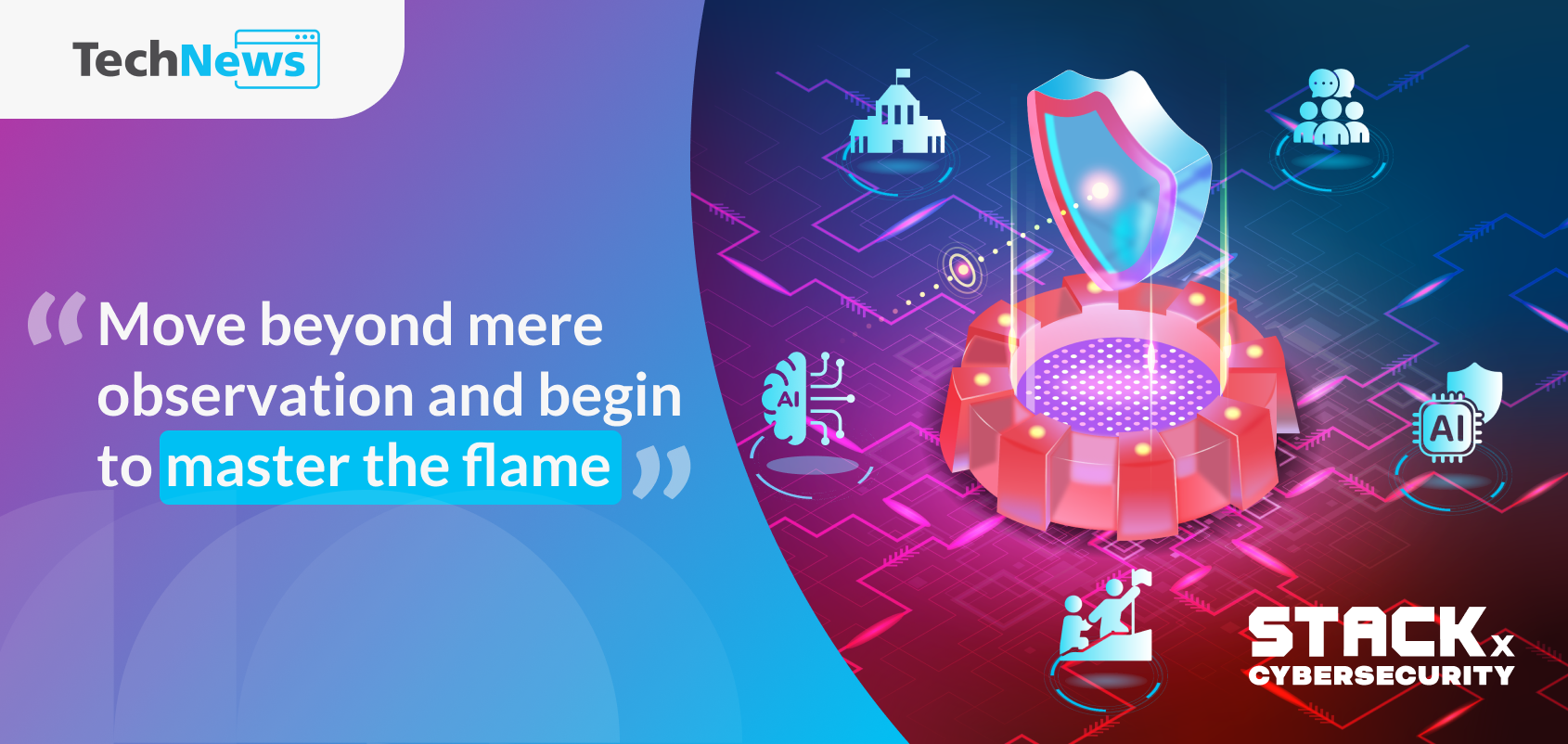
To navigate this, we must move beyond mere observation and begin to master the flame. And that’s what STACKx Cybersecurity 2026 is all about. Designed for government leaders, agency Chief Information Officers (CIOs), tech professionals, business users, and industry practitioners, the conference brings together the brightest minds in the industry shifting the conversation around AI from theoretical risks to real solutions that actually work in practice.
Rising flames: Maintaining public trust in the line of fire
The morning track of our upcoming STACKx Cybersecurity 2026 conference is dedicated to defining the current crisis of confidence in the digital world.
In recent years, the rapid growth of autonomous systems has blurred the lines between genuine and synthetic interactions. This environment has created a situation where traditional security perimeters are no longer sufficient.
Take AI systems, for example. We're moving from basic tools that just respond to commands to smart systems that can set their own goals and work through networks (including accessing sensitive information) with the same determination as a human would. This makes keeping our systems trustworthy much more challenging.
In this high-stakes landscape, the Singapore government remains committed to ensuring that digital services are not only efficient but fundamentally secure. The problem we face is that trust cannot be assumed; it must be actively engineered and defended.
Before we go into our breakout tracks, here is an overview of the day's agenda:
Morning Session - Defining the current crisis of confidence and global cyber threats.
First Afternoon Track - Utilising AI within security operations to automate and accelerate defensive capabilities.
Second Afternoon Track - Securing AI architectures against manipulation through “secure by design” principles.
Third Afternoon Track - Strengthening cyber leadership, ethics, and human stewardship.
The morning session will provide a candid look at the state of global cyber threats, acknowledging that our digital foundations may be vulnerable to the very technology meant to enhance them. By understanding the current threat environment, we can better prepare the solutions that will be discussed in the afternoon.
Forging trust with fire: Utilising AI for defence
Making AI work for us means turning what attackers use against us into our best defence. In our first afternoon session,, we explore the concept of "forging with fire," where we utilise AI for work in the security operations centre to automate and accelerate our defensive capabilities.
The reality of modern conflict is that it’s no longer strictly human versus human; it has become AI versus AI. To keep pace with automated exploits, our defensive systems must be equally autonomous, capable of identifying anomalies and neutralising threats at speeds that far exceed human cognition.
In our first track, we deep dive into the nuts and bolts of building these advanced shields. At the STACKx Cybersecurity 2026 conference, we’ll examine how machine learning models can be trained to predict attack patterns before they manifest.
By integrating these intelligent systems into our national infrastructure, we forge a more resilient digital government. We are not just reacting to the fire as it burns; we’re using its intensity to build a stronger, more durable framework for the future of Singapore's digital ecosystem.
Tempering the fire: Securing AI within our own systems
While we use AI to protect our systems, we must also recognise that the AI models themselves have become high-value targets.
Just as a blacksmith tempers steel to prevent it from becoming brittle or breaking under pressure, we must secure our AI architectures against manipulation. Data poisoning, model theft, and prompt injection are no longer theoretical concerns; they’re active risks that can turn a helpful tool into a liability.
In the second track, we’ll dive deep into “secure by design” principles. This involves building security into the model’s architecture rather than patching it later; essentially, taking proactive steps to secure our AI foundations to minimise the chances of vulnerabilities, leaks, or cyber-attacks.
We’ll discuss methodologies to ensure the integrity of training data and the robustness of the decision-making process in agentic AI systems. This helps us construct a disciplined security approach for ensuring that AI remains a trusted partner, while withstanding even the most sophisticated adversarial pressure.
Stewarding the flame: Strengthening cyber leadership
Technology will continue to evolve, but the responsibility for its governance remains a human endeavour. To ‘steward the flame’ is to recognise that leadership, ethics, and mentorship are the final safeguards in any technological framework.
As we deploy more autonomous systems, the role of the cyber defender shifts from a manual operator to a strategic risk governor. We need leaders who can navigate the ethical dilemmas of automation while fostering the next generation of talent within Singapore’s tech hub.
This last track will focus on the human side of the STACKx Cybersecurity mission. It outlines how senior management and policymakers can create security cultures that priorities transparency and accountability from the ground up.
By mentoring young digital defenders and establishing clear lines of ethical responsibility, we ensure that the fire of innovation remains a source of warmth and progress rather than destruction. Technology provides the power, but human stewardship provides the direction that’ll ensure the ‘fire’ of AI is useful and helpful, rather than deadly.
As Singapore strengthens its position as a global digital hub, developing cyber leadership and talent pipelines will be critical to sustaining trust in digital services.
Join the conversation at STACKx Cybersecurity 2026
Date: 17 April 2026
Venue: Sands Expo and Convention Centre
The digital future we’re building depends entirely on our ability to work together across the public and private sectors. Trust cannot be retrofitted in the middle of a crisis; it must be built into every line of code and every strategic decision we make today. The lessons learned from the rising flames of AI will define the security of our nation for decades to come.
Join us to:
Explore real-world AI cybersecurity implementations
Learn from cross-sector cyber leaders
Network and connect with Singapore’s cybersecurity ecosystem
Discover emerging tools and cyberdefence strategies
Register now to be part of STACKx Cybersecurity 2026 and help shape a trusted digital future together.
Connect with us!

Subscribe to the TechNews email newsletter