
Inclusivity and Accessibility
Building an accessible Smart Nation: Inclusive design in Singapore’s digital services
8 August 2025
How can digital services be made more accessible for all? Learn how GovTech applies inclusive design principles to build a more inclusive Smart Nation.
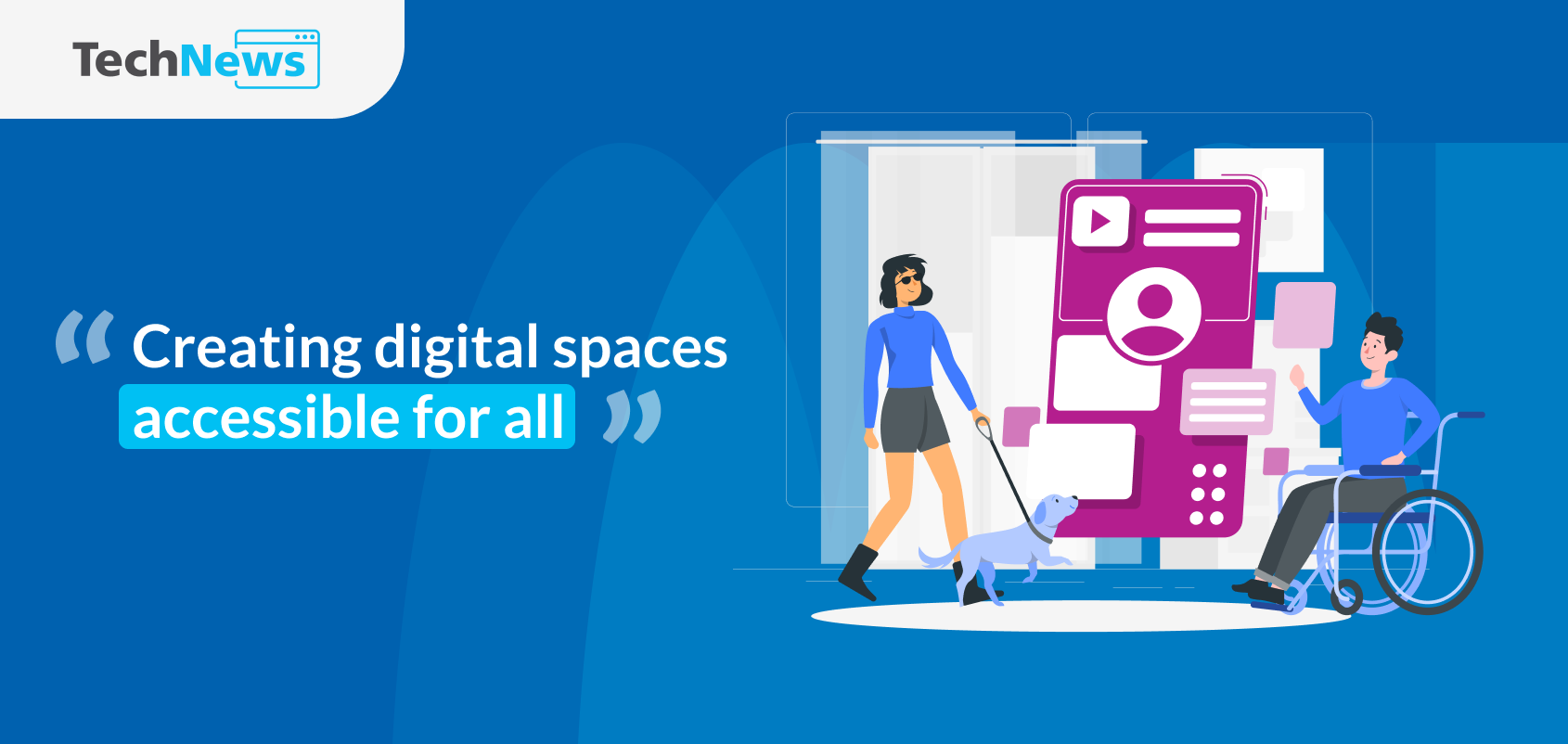
Digital accessibility overcomes common barriers to ensure websites, apps, and content are usable by everyone, including those with disabilities.
In Singapore, digital inclusion is vital for an equitable society, supporting persons with disabilities in accessing essential online services.
GovTech promotes digital accessibility and inclusive design through tools like Oobee, Digital Service Standards and A11y Playground, while organising events like learning festivals to empower public officers with these knowledge and resources.
What is digital accessibility?
Digital accessibility refers to the practice of designing and developing websites, applications, and digital content so that all individuals, including those with disabilities, can perceive, understand, navigate, and interact with digital touchpoints effectively.
It's about ensuring equal access to information and functionalities in our increasingly digital world. For instance, this can involve incorporating alternative text (alt text) for images or providing captions for videos, allowing users with visual impairments to understand visual content via screen readers, or those with hearing impairments to follow video narratives.
What is inclusive design?
Inclusive design is a methodology that ensures products and services are usable by the widest possible range of people, regardless of their age, ability, or background—placing human diversity at the centre of the design process. Rather than retrofitting accessibility features, inclusive design seeks to build digital spaces that are inherently accessible and usable for all from the outset.
This means designing with features such as responsive website layouts that adapt to various devices, customisable font sizes for users with low vision, and strong colour contrasts to aid readability for those with colour blindness. It can also include clear and consistent navigation for ease of use or adjustable timing options for tasks where certain users may have slower reaction times, ensuring comprehensive usability for everyone.
Why is digital accessibility important in Singapore?
With approximately 45,000 Persons with Disabilities (PWDs) in Singapore as of 2023, digital accessibility and inclusive design are critically important to foster a truly equitable society.
Without such considerations, digital environments can inadvertently hinder participation in education, limit employment opportunities, obstruct access to essential services, or reduce engagement in social activities for PWDs.
Accessibility and inclusion efforts help ensure that our digital services and Smart Nation initiatives leave no one behind.
Key principles of inclusive design
To create truly inclusive digital experiences, these four principles by the Web Content Accessibility Guidelines (WCAG) lay the foundation necessary for anyone to access and use web content:
Perceivability
Content and interfaces should be accessible to all senses. This means users must be able to perceive the information being presented, regardless of their sensory abilities.
Operability
All interactive elements should be easy to use for people with disabilities. This implies that users must be able to operate the interface and navigate content effectively.
Understandability
Information and the operation of the user interface must be understandable, meaning clear and simple user interfaces and content should be prioritised. This involves using plain language, consistent navigation, and predictable layouts to minimise cognitive load.
Robustness
Ensure that digital content is accessible across different technologies and devices. Content must be robust enough to be interpreted reliably by a wide variety of user agents, including assistive technologies. This principle ensures future compatibility and broad access.
Examples of inclusive design
Responsive design
From mobile phones to large desktop monitors, websites and applications should adapt seamlessly to different screen sizes and devices. This flexibility benefits users with varying visual needs or those who use assistive technologies that alter screen magnification.
Customisable interfaces
Interfaces should allow users to adjust elements like font sizes, colour schemes, and contrast levels directly within an application or website. This empowers individuals with visual impairments or dyslexia to tailor their viewing experience for optimal readability.
Clear and consistent navigation
Design intuitive navigation menus and predictable layouts. This allows users to easily find information and complete tasks. This is particularly beneficial for users with cognitive disabilities, ensuring a smooth and frustration-free experience.
Accessible forms
Forms that are easy to fill out using various input methods, including keyboard-only navigation and screen readers are essential for digital accessibility. This involves clear labelling, logical tab order, and helpful error messages, ensuring no user is excluded from completing essential online transactions.
Best practices when implementing digital accessibility
Implementing effective digital accessibility requires a proactive and thoughtful approach. Adhering to best practices ensures that digital products serve all users comprehensively. To achieve this, organisations should focus on key strategies that embed accessibility from the outset and continuously improve their digital offerings:
Conducting accessibility audits
Businesses and organisations should regularly evaluate their digital products for accessibility. These audits involve using automated tools or manual testing by accessibility experts to identify barriers and non-compliance with established guidelines like the Web Content Accessibility Guidelines (WCAG).
Designing for all users from the start
It is crucial to integrate inclusive design principles into the early stages of product development, rather than treating accessibility as an afterthought. By considering diverse user needs from conception, development teams can build inherently inclusive products, saving time and resources on costly retrofits later.
Collaboration with users with disabilities
Engaging directly with users with disabilities throughout the design and development process is invaluable. Their unique insights and feedback can reveal barriers that might otherwise be overlooked, leading to better, more inclusive products.
GovTech's role in promoting digital accessibility and inclusive design
GovTech plays a pivotal role in promoting digital accessibility and inclusive design within Singapore, starting with the public sector. Our initiatives underscore a commitment to ensuring that government digital services are accessible to every citizen, fostering digital inclusion.
Oobee – A tool for accessibility assessment
Oobee, GovTech's automated accessibility testing tool helps public officers evaluate their digital services against WCAG guidelines without requiring deep technical expertise. By scanning both public-facing websites and internal government systems, Oobee helps teams identify and offer code-level fixes for accessibility issues like missing alt text, insufficient colour contrast, improper heading structures and more. This automated approach not only saves time but also helps teams catch accessibility problems early in the development process, making remediation more efficient and cost-effective.
Oobee was recently integrated into GovTech’s Whole of Government Application Analytics (WOGAA) dashboard via the Inspect Plus module, to help public officers and their development teams assess their sites’ accessibility alongside site analytics and performance. The new Inspect Plus accessibility module, powered by Oobee offers:
Automated inspection of up to 1,000 pages per website.
Stronger benchmarking against 20 WCAG success criteria.
Organised insights by showing how often each accessibility issue occurs and whether it affects WCAG A (Minimum Accessibility), AA (Mid-Range Accessibility), or AAA (Highest Accessibility) conformance levels. While level AAA is ideal, it is often unachievable for large websites. Such insights help teams prioritise and plan accessibility-related web efforts effectively.
Design standards and reusable components – Standardising best practices across government digital services
We advocate adherence to the Digital Service Standards (DSS), which helps agencies deliver digital services that are easy, seamless, and relevant, with design principles covering Intuitive Design, Usability, Accessibility, and Inclusivity. The DSS sets clear accessibility requirements that development teams must meet. These standards cover everything from keyboard navigation and screen reader compatibility to proper form labelling and text resizing capabilities, ensuring that digital services are highly accessible.
Furthermore, the Singapore Government Design System (SGDS) ensures all government services share a common user interface (UI) language and user experience, incorporating UI components and templates to maximise user experiences. SGDS provides developers and designers with pre-built, accessible components that comply with accessibility standards out-of-the-box. These components, ranging from navigation menus to form elements, are thoroughly tested for accessibility and come with built-in ARIA labels, keyboard navigation support, and proper semantic markup. By using SGDS, teams can focus on building their services while being confident that their basic interface components meet accessibility requirements.
Did you know: Both Oobee and SGDS are open source! By making these tools publicly available, GovTech enables developers from both public and private sectors to inspect, improve, and adapt these accessibility solutions for their own projects. This transparent approach not only enhances the tools through community contributions but also raises the accessibility standards across Singapore's entire digital landscape.
Knowledge sharing and thought leadership – Advocating good product design through Design Festival, Service Design Week, and Inclusive Design Week
GovTech’s Design Festival is a month-long series of webinars, workshops, courses, and learning journeys held inaugurally for the first time in July 2025. Themed “Impact by Design”, this learning festival is curated to help GovTechies tackle real-world challenges and create meaningful change through design strategies and best practices that lead to impactful products.
These 2 additional tracks for public officers help drive further advocacy for service design and inclusive design within the public sector:
Service Design Week – This learning week showcases how GovTechies have championed service design in collaboration with other government agencies to create human-centric public services.
Inclusive Design Week – This learning week raises awareness about the importance of digital accessibility and showcases how inclusive design can be incorporated into government digital products to build a more accessible and inclusive Singapore.
Learning from lived experiences
GovTech’s Inclusive Design Week also featured real-life sharings of PWDs’ concerns and struggles when it comes to digital interactions, helping public officers understand first-hand the challenges that PWDs face when navigating everyday tasks. This helps build empathy and provides a stronger motivation for government agencies to prioritise accessibility and inclusive design in digital services.
The event highlighted experiences like that of Jasmine Yau, a 31-year-old member of the Muscular Dystrophy Association of Singapore. She is diagnosed with spinal muscular atrophy, a genetic disorder that causes progressive muscle wasting.
While she enjoys certain recreational digital activities like creating digital art (where her Eyegaze assistive device is crucial), other essential digital tasks like online logins often give her a hard time.
PWDs like her need a longer time to complete the one-time password (OTP) login process and frequently get timed out before they can meet the time limit, making the user experience extremely onerous. Hearing such first-hand stories might inspire agencies to prioritise inclusive design features in their digital services, such as letting users turn off, adjust, or extend time limits.
Introducing A11y Playground: A platform to foster and facilitate the use of inclusive design
These everyday PWD struggles and our commitment to building an inclusive Smart Nation are some of the reasons why GovTech set out to develop A11y Playground.
A11y Playground is a platform that empowers digital product teams and decision-makers to design digital services with an accessibility-first mindset, featuring resources like assessment tools and checklists. PWD user stories are also featured on the site so that product teams can better understand and empathise with the users they are designing for.
The site offers a comprehensive suite of resources, including a DSS-aligned accessibility checklist that:
Provides guidance on how to implement accessibility best practices.
Simplifies the technical requirements for non-technical public officers.
Helps public officers understand why these best practices are important.
The checklist also breaks down the best practices into smaller, achievable sections so that public officers don’t have to feel overwhelmed by the requirements of accessibility. In fact, just addressing 10 of the “Essential” items in this checklist addresses 96% of all web accessibility errors—a good starting point to building an accessible and inclusive website.
Get in touch: If you are a public officer keen to find out more about accessibility or collaborate with GovTech's Usability & Accessibility team, you may contact the team via this form.
How you can co-create with GovTech
We believe that achieving digital accessibility and inclusive design requires a collective effort, so we’re inviting you to co-create inclusive government digital services with us:
For citizens: Join the Tech Kaki user testing community to participate in focus groups, user testing sessions, surveys, and more. Share your feedback and insights that help GovTech build better digital products and services for Singapore.
For government agencies: Tap on the Tech Kaki community to conduct user testing for your products. The insights that you gain from the Tech Kaki members can translate into impactful improvements that better meet the needs of your product users. If you're looking to get thoughtful, people-first feedback on your agency’s product, get in touch with the Tech Kaki team today!
Connect with us!

Subscribe to the TechNews email newsletter